Did you know that 35 million European households switching to 30 °C washes since 2020 have already prevented nearly 952,000 tons of CO₂ emissions?
That’s like taking more than 200,000 cars off the road for a year.
And all it took was turning down the dial.
Laundry is one of those background tasks we barely think about when talking about sustainability, yet it has ripple effects far beyond our homes. The water we use, the energy we burn, the fibres that slip unseen into rivers… all of it adds up.
This is why laundry is more than a chore. It’s a lever for climate action. And the good news? You don’t need a complete lifestyle overhaul to make a difference. A few smart shifts in how you wash, dry, and care for your clothes can cut your footprint dramatically.
Let’s pull back the curtain on laundry’s hidden impact and explore the changes, big and small, that make your routine more sustainable.
The Hidden Impacts of Laundry
Behind every wash cycle is a trail of energy and water. Most people don’t realise that up to 90 percent of a washing machine’s energy use goes to heating water. That means the choice between hot and cold is the single most important decision in a load of laundry.
Water use is another silent drain. Across Europe, washing machines consumed over 1,161 billion litres of water in 2020. That’s enough to fill nearly half a million Olympic swimming pools. Every litre has to be treated, heated, and eventually processed as wastewater, so every cycle matters.
Then there’s the problem we can’t see: microfibers. Each spin cycle shaves off tiny threads from our clothes, especially synthetics, and sends them into waterways. In the UK alone, households shed up to 17,800 tonnes of microfibers a year; a plastic pollution crisis unfolding in washing machines.
And we can’t forget the clothes themselves. Overwashing wears them out faster, leading to more waste. With fashion already responsible for 10 percent of global carbon emissions, accelerating that cycle of buy–wash–discard is the last thing our planet needs.
Small Habit Shifts with Big Impact
Here are some simple habits that can help you incorporate sustainability in laundry:
1. Rethink How Often You Wash
The easiest way to start? Wash less often. Not everything needs to be tossed into the hamper after one wear.
Jeans, sweaters, and jackets can often be aired out and reworn without a full wash. Less washing means less water, less energy, and longer-lasting clothes.
2. Make Every Load Count
When you do wash, aim for full loads. A half-empty machine wastes resources, while an overstuffed one cleans poorly and may force you to rewash. Finding the balance ensures you get the most out of every cycle.
How full the washer needs to be depends on the type. For instance, for top-load washers, target ¾ full while ⅔ to ¾ full works ideally for front-loaders. But again, always remember to check the manufacturer recommendation for optimal results.
3. Turn Down the Heat
Switching to cold water is another game-changer. Most detergents today are designed to work in cold settings, and studies show that cooler washes preserve fabrics while slashing emissions. The collective impact is massive: millions of Europeans turning down the heat already avoided nearly one million tons of CO₂.
4. Choose Smarter Cycles and Drying Methods
Shorter cycles also deserve attention. For lightly soiled clothes, a quick wash does the job with far less waste. Pair this with air drying, and your impact drops even further. Dryers are some of the most energy-hungry appliances in the home. A simple drying rack or clothesline not only saves energy but also extends the lifespan of your wardrobe.
Smarter Products and Machines
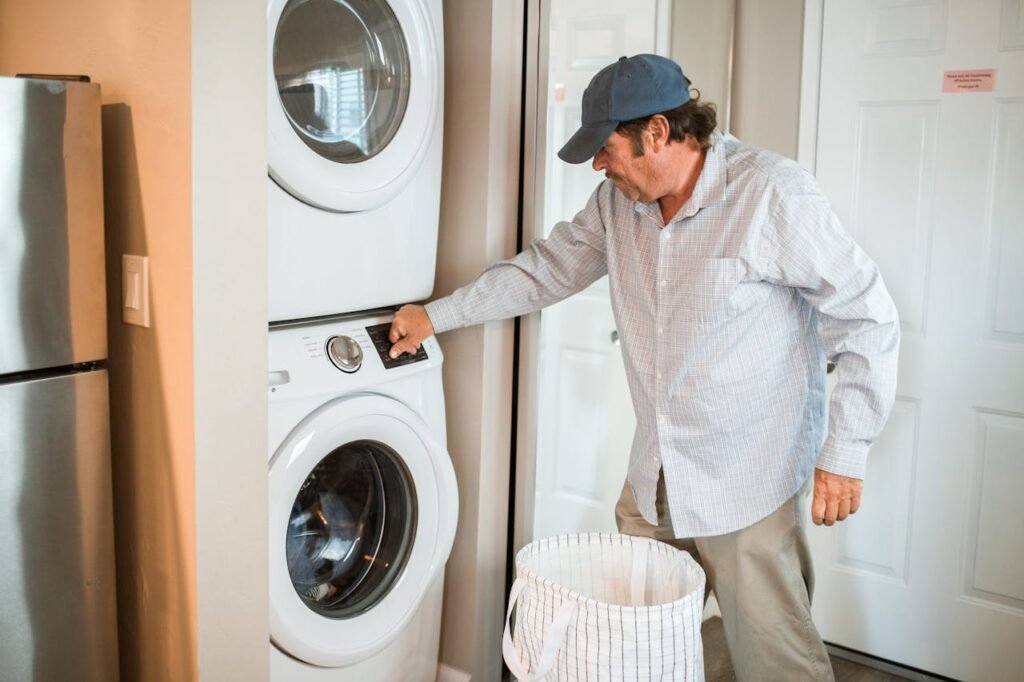
Sustainable laundry doesn’t stop at habits. It’s also about the tools you use.
5. Choose Efficient Washing Machines
Washing machines vary widely in efficiency, and front-loaders are generally better at saving water and energy. Modern high-efficiency models are built to minimize waste and often spin faster, so clothes need less drying time.
6. Upgrade to Better Dryers
Dryers are evolving too. Heat pump dryers consume far less energy than traditional models, making them a worthwhile investment for households that rely on machine drying. Though the upfront cost is higher, the savings in electricity bills and emissions quickly add up.
7. Rethink Your Detergent Choices
Detergents also shape the footprint of each load. Eco-friendly brands that perform well in cold water, come in concentrated formulas, or use refillable packaging help cut down on waste. Skipping phosphates, synthetic fragrances, and excess plastic is kinder to waterways and your skin.
8. Capture Microfibers Before They Escape
Then there’s microfiber capture. Washing bags and filters are becoming essential tools for any sustainable laundry setup. Tests show they can trap up to 90 percent of shed fibres, preventing them from entering rivers and oceans. In one case study in Sri Lanka, a filtration system reduced microfibers in wastewater by 98 percent.
9. Keep Machines Well Maintained
Finally, don’t underestimate maintenance. A clean lint filter, unclogged hose, and properly loaded drum all help your machine run more efficiently, saving resources and reducing fibre shedding.
Thinking Long Term
Of course, sustainability isn’t a one-time thing. It should be embraced in the long-term:
10. Make Sustainability the Default
Sustainable laundry also requires us to zoom out. What if eco-friendly choices weren’t occasional but the default?
Setting your machine to “cold” as the standard, or agreeing in a shared home to wash only full loads, creates new norms that make sustainability effortless.
11. Invest in Smarter Technology
Technology upgrades also play a role. Energy-efficient washers, solar water heaters, and high-efficiency dryers are big-ticket items, but they deliver long-term dividends in both cost savings and reduced emissions.
Choosing certified efficient models when replacing appliances is one of the most impactful consumer decisions you can make.
12. Choose Clothes That Last
Clothing choices are another part of the puzzle. Durable fabrics that hold up to repeated washes extend the lifespan of your wardrobe.
Natural fibres biodegrade more easily, while synthetics shed microplastics though pairing them with filters helps. Buying fewer but higher-quality items reduces the overall load on both your laundry basket and the planet.
13. Use Your Influence Beyond the Home
And don’t forget the power of influence. Whether it’s advocating for better machines in apartment buildings or supporting policies that require microfiber filters in new appliances, your voice can help scale change beyond your household.
Clean, But Not at Any Cost
14. Prioritize Hygiene When It Matters
Of course, there are moments when sustainability has to bend to practicality. Hygiene is a real need. Bedding, towels, diapers, or clothes worn during illness sometimes require higher temperatures to kill bacteria.
But even here, balance is possible. Instead of defaulting to hot washes every time, reserve them for when they are truly necessary and use cold water for routine loads.
15. Treat Stains Smarter
Stains are another point of tension. Many people overwash entire garments just to deal with a small mark.
Spot treating or soaking the affected area first saves resources and extends the garment’s lifespan. A thoughtful stain strategy often beats the reflex of tossing something into the wash immediately.
16. Accept the Trade-Offs
Trade-offs are inevitable. Eco cycles might take longer, cold washes might require a bit of pretreatment, and high-efficiency machines might cost more upfront.
But the long-term benefits, which include lower bills, longer-lasting clothes, reduced environmental harm, make the effort worthwhile. Sustainability isn’t about perfection. It’s about making better choices more often, even when they aren’t the most convenient.
Conclusion
Every laundry cycle is a choice. You can choose hot washes, half loads, chemical-heavy detergents, and tumble drying. Or, you can choose to wash in cold water, wait for full loads, hang clothes to dry, and invest in simple tools like filters.
The difference might feel small in your own home, but multiplied across millions of households, it becomes transformative. The fact that something as simple as lowering wash temperatures in Europe already prevented almost one million tons of emissions should give us hope.
Does your blog have a contact page? I’m having a tough time locating it but, I’d like to send you an e-mail. I’ve got some ideas for your blog you might be interested in hearing. Either way, great blog and I look forward to seeing it grow over time.
Hi there would you mind letting me know which webhost you’re utilizing? I’ve loaded your blog in 3 different internet browsers and I must say this blog loads a lot quicker then most. Can you recommend a good internet hosting provider at a fair price? Kudos, I appreciate it!
Does your website have a contact page? I’m having trouble locating it but, I’d like to send you an e-mail. I’ve got some ideas for your blog you might be interested in hearing. Either way, great blog and I look forward to seeing it improve over time.
I’ve been absent for some time, but now I remember why I used to love this site. Thanks , I¦ll try and check back more frequently. How frequently you update your site?